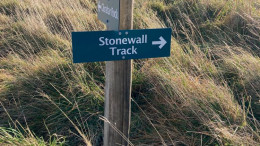

Please check the Summit Road Society website(external link)(external link) for track closures and updates in the Omahu Bush area.

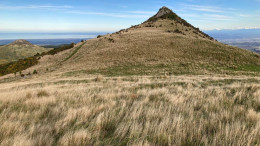
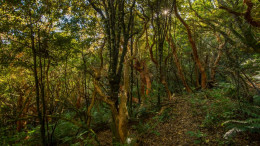
This beautiful native bush reserve offers expansive views over the Canterbury Plains as well as trails through rich, mature native forest.
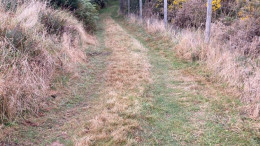
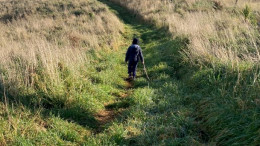
Access the walking tracks from the Gibralter Rock car park, located along Summit Road, not far from the Ahuriri Reserve cattle stop.
Dogs are strictly prohibited from the reserve to protect the native wildlife that volunteers have worked so hard to attract back.
Hunting is also strictly prohibited in the reserve.
The nearest toilets are located at Sign of the Bellbird.
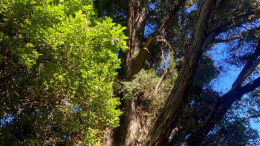
Omahu Bush Reserve features many mature remnant podocarp trees and is renowned for its native tree fuchsias, ferns and lichens. Native trees and shrubs include broadleaf, horopito pepperwood, lancewood, kānuka, five-finger, native fuchsia, cabbage tree, kaikōmako, wineberry, tōtara, silver tree fern, kahikatea, mataī, and soft tree fern.
The bush supports abundant birdlife, including korimako (bellbird), pīwakawaka (fantail), kererū, riroriro (grey warbler), tauhou (silvereye), and miromiro (tomtit). Predator control efforts in recent years have significantly increased birdlife in the reserve.
Research to date suggests the name Omahu means "running silently," "escaping," or "a place of healing," reflecting the area's cultural history.
Originally part of Sir Heaton Rhodes’ Otahuna Estate, the land changed hands after his death in 1956. In 1957, the Crown divided 1978 hectares into small farms for returned servicemen under the Rehabilitation Loan Scheme. The Prendergast family acquired approximately 450 hectares, clearing the lower slopes for farming while wisely leaving the upper slopes in native bush.
In the early 1980s, Dr Brian Molloy, a respected botanist and conservation advocate, encouraged the Prendergasts to protect the bush under a Queen Elizabeth II Open Space Covenant. They agreed, and in 1985, the covenant was signed, ensuring the area’s long-term protection.
In 1998, the Gama Foundation, a charitable trust established by Grant and Marilyn Nelson, purchased the covenanted land and began restoration efforts, focusing on fencing and pest control to mitigate the impact of feral goats, pigs, deer and possums.
In 2007, the Gama Foundation also acquired nearby Gibraltar Rock and adjoining grazing land up to the Summit Road, protecting this land with a covenant in 2008. Recognising the need for long-term conservation, the Nelsons transferred ownership and daily management of Omahu Bush and Gibraltar Rock to the Summit Road Society in 2010. The Society now manages the reserve for public enjoyment and conservation.
The Summit Road Society currently owns three reserves on the Christchurch Port Hills – Ōhinetahi Bush Reserve(external link), Omahu Bush & Gibraltar Rock(external link) and Linda Woods Reserve(external link) (formerly known as Tussock Hill).
The Summit Road Society-owned reserves are privately owned reserves for the public to enjoy. The Society reserves the right to temporarily close all or part of any of the reserves for safety and maintenance reasons.
While Christchurch City Council Parks endeavour to stay up to date with track closures, we encourage you to visit the Summit Road Society website(external link) or Facebook (external link)to check for recent changes and updates.
Volunteering
New volunteers are always welcome at Omahu Bush Reserve! Tools can be provided, and your help makes a real difference.
Contact Bill McSweeney, Honorary Ranger: bill.margaret@xtra.co.nz