
A brief summary of the history and background of the OARC, both pre- and post- earthquakes.
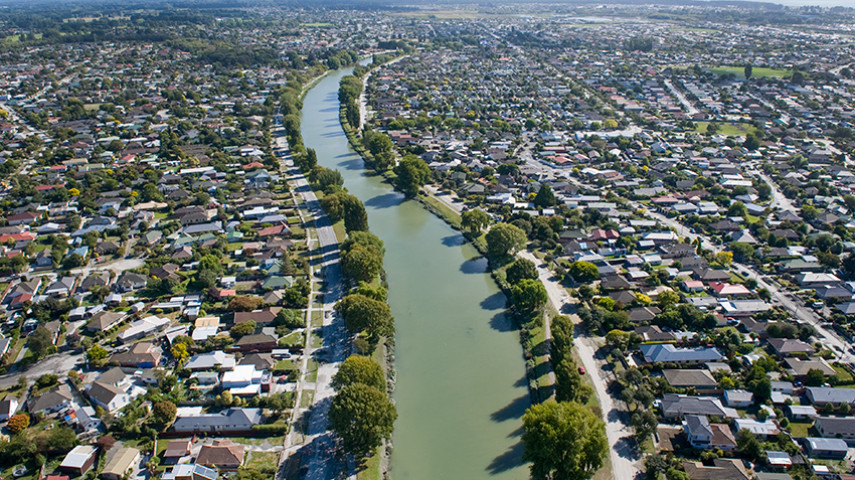
At 602 hectares, the Ōtākaro Avon River Corridor regeneration area is three-and-a-half times larger than Hagley Park.
Although this will be a generational project that’s likely to take between 30 and 50 years to fully develop, we encourage people to visit and connect with the land that once held more than 5,000 homes.
The Ōtākaro Avon River and the surrounding area have a long and vibrant cultural history. Ngāi Tahu – and Ngāti Māmoe and Waitaha before them – had permanent and temporary kainga and pa in the greater Christchurch area. The Ōtākaro Avon River and Ihutai/Avon Heathcote Estuary are of vital importance to mana whenua, who prized the abundant food and natural resources that could be harvested from the springs, waterways, wetlands, grasslands, and forests that flourished in the area.
In the 19th and early 20th centuries, the Ōtākaro Avon River was often used for recreation and boating, with trout fishing being a popular pastime until fish numbers dwindled due to a decline in their food source and water quality from stormwater and wastewater entering the catchment.
Water quality is a high priority for the Council, and we’re concentrating on improving the quality of the Ōtākaro Avon River’s water. Prior to the 2010 and 2011 earthquakes, the area was home to thousands of people, communities, businesses and schools.
The September 2010 and February 2011 earthquakes severely affected the area, with the Government classifying the 602 hectares as a residential red zone. This meant the land had experienced significant and extensive damage, there was uncertainty about the success of any potential engineering solution given ongoing seismic activity, and repairs would be disrupted and protracted for property owners, impacting their health and wellbeing.
Within the red zone area, the owners of almost 5,500 properties accepted Crown offers to purchase their properties and remove them from the Ōtākaro Avon River Corridor.
Between 2017 and 2019, Crown-and-Council-funded planning organisation Regenerate Christchurch commissioned a significant number of reports and assessments and undertook extensive community and stakeholder engagement to develop a Regeneration Plan for the Ōtākaro Avon River Corridor(external link). This plan was approved by the Minister for Greater Christchurch Regeneration, Megan Woods, in August 2019.
Christchurch City Council submitted investment cases to both the Crown and the Christchurch Earthquake Appeal Trust for funding to kick-start the development of the Regeneration Area, and received $40 million from the Canterbury Regeneration Acceleration Fund and $13.7 million from the Appeal Trust.
The riverside Dallington Landing, Snell Bridge, Avondale Bridge and Medway Bridge, which were completed in 2022, were funded by this grant.
Land title reconfiguration
The responsibility for consolidating the land titles was part of the Global Settlement Agreement negotiations between the Crown and Council.
It was agreed that before any development can take place in the Ōtākaro Avon River Corridor, Toitu Whenua - Land Information New Zealand would undertake the important project of reconfiguring nearly 5,500 land boundaries. This is happening progressively, with the land being delivered to Council in tranches.
Road and pipes
The Council will not automatically remove existing infrastructure, such as roads and pipes.
We need to work through thousands of easements on titles and consider what’s required. We’ll consider removing buried infrastructure, such as pipes and cables, on a case-by-case basis.
Our obligation is to continue providing Council services to those who have opted to continue living within the Regeneration Area. If required, we’ll seek to engage with these private property owners in the future.
Maintenance
The Council’s Global Settlement Report (Section 14.1.2) outlines that from 1 July 2020, $2.7 million has been budgeted annually for maintenance, plus rates, for all of the residential red zones. As also noted in the Council report in section 14.1.1, capital costs have been budgeted for some time.
The amount that has been budgeted is enough to cover this maintenance.