
Commemorations and ceremonies are held regularly in Christchurch City.
Anzac Day is observed on 25 April each year. It is a day to remember and reflect, honouring all New Zealanders who have served in war and those who continue to serve today, as well as those who made the ultimate sacrifice in past and present conflicts. Anzac Day serves as a public holiday in New Zealand.
Anzac Day also marks the anniversary of the landing of the Australian and New Zealand Army Corps (ANZAC) at Gallipoli in 1915. During the Gallipoli campaign, 8500 Australians and 2779 New Zealanders lost their lives, an event that has had a lasting impact on the national identity of both countries.
Anzac Day was first commemorated in 1916 and continues to be observed throughout New Zealand and Australia today with commemorative events traditionally beginning at dawn and continuing through the morning.
The primary focus of the Christchurch City Council is to support the Christchurch Memorial RSA in delivering public Anzac Day services across Christchurch, with elected representatives attending local commemorations at War Memorials throughout the city. The Council supports the delivery of the Anzac Dawn Service, held in Cathedral Square at the Citizens’ War Memorial, which each year sees a large number of veterans and members of the public in attendance.
Armistice Day commemorates the day the when the guns fell silent and when the German Empire and the Allied powers signed the Armistice in 1918, marking the official end of World War 1. It is observed every year at 11am on 11 November (the eleventh hour of the eleventh day of the eleventh month) marking the exact moment when hostilities ceased on the Western Front.
Every year, Christchurch City Council, supports the Christchurch Memorial RSA in commemorating Armistice Day, typically at the Bridge of Remembrance in the central city.
The service includes a two-minute silence at 11am, a bugler sounding the Last Post and Reveille, the recitation of the Ode to the Fallen, and the laying of official wreaths.
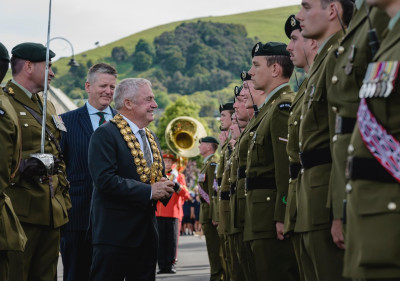 A Charter Parade is a ceremonial military tradition. The city grants a military unit the Freedom of the City, a formal honour recognising the unit’s distinguished service and its historic relationship with the community. This honour allows the unit to march through the city with full ceremonial privileges, including colours flying, drums beating, swords drawn and bayonets fixed.
A Charter Parade takes place on special occasions, such as anniversaries, major commemorations, or significant milestones for a military unit. These parades require the approval of both the Christchurch City Council and the relevant military unit.
These parades can take place in the central city, including Cathedral Square, and may involve inspections by the Mayor and ceremonial challenges by New Zealand Police.
Within the Christchurch City Council boundaries are the following Freedom of the City Charters with the following military units:
- HMNZS Canterbury and the City of Christchurch
- HMNZS Pegasus and the City of Christchurch
- 2/1 Battalion, Royal New Zealand Infantry Regiment and the City of Christchurch
- 2/4 Battalion, Royal New Zealand Infantry Regiment and the City of Christchurch
- Royal New Zealand Engineers Field and 3rd Field and Emergency Response Squadron, 2nd Engineer Regiment and Akaroa
- RNZAF Wigram and the City of Christchurch
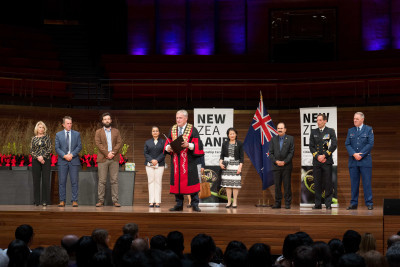 A citizenship ceremony is the final formal step in becoming a New Zealand citizen.
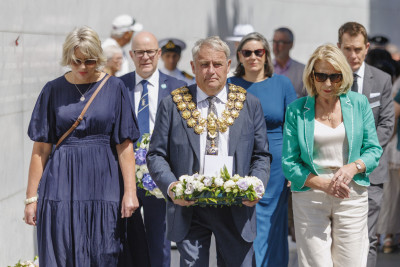 The Civic Memorial Service is held each year in remembrance of those who lost their lives, and those who’s lives were changed forever, by the 22 February 2011 Christchurch earthquake.
The magnitude 6.3 earthquake caused devastating impacts across the city, resulting in the loss of 185 lives and severe damage to thousands of homes and buildings.
The Christchurch City Council delivers a public memorial service each year at Oi Manawa Canterbury Earthquake Memorial on 22 February to coincide with the timing of the earthquake, which struck at 12.51pm.
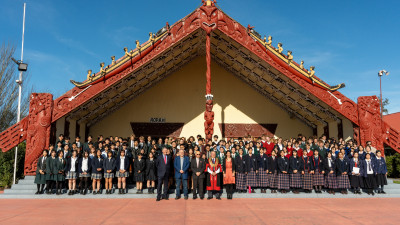 Each year, Christchurch proudly welcomes hundreds of international students to our city with a special mayoral welcome held at the iconic Ngā Hau e Whā National Marae.
This unique event begins with a traditional pōwhiri, offering students a warm and culturally rich introduction to Aotearoa New Zealand.
The Mayor of Christchurch attends to personally greet the students and acknowledge the important role they play in enriching our city’s cultural and educational landscape.
The celebration also includes the Waitaha Canterbury International Student Awards, which honour international students who go above and beyond in contributing to our community through leadership, cultural engagement or volunteer work.
This annual event is delivered in collaboration with Christchurch Educated and ChristchurchNZ, reflecting our city’s commitment to being a welcoming and inclusive place for learners from around the world.
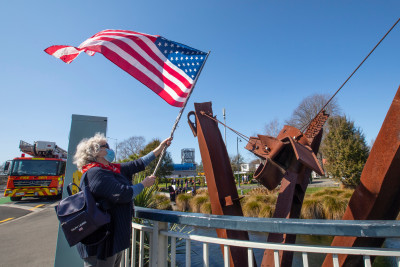 This annual civic commemoration service is to honour and remember those emergency service personnel who lost their lives, and whose lives where changed forever, by the September 11 terror attacks. The attacks caused devastating impacts across the United States, resulting in the loss of nearly 3000 lives, including 403 firefighters and police officers, and caused significant shockwaves across the world.
Christchurch City Council supports Fire and Emergency New Zealand in the delivery of a public civic service at the Firefighters Reserve, located at 318 Madras St, which includes a minute silence, speeches and wreath-laying.
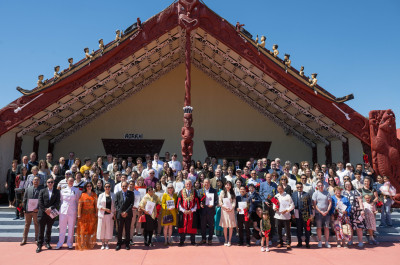 Waitangi Day is a national public holiday held each year on 6 February to mark the signing of the Treaty of Waitangi in 1840. The Treaty was first signed at Waitangi by representatives of the British Crown and about 40 Māori chiefs, and over the following months more than 500 chiefs (Rangatira) across Aotearoa signed the document with three chiefs in signing in the South Island with one being signed at Onuku in Akaroa. The Treaty is widely regarded as the founding document of modern New Zealand.
Waitangi Day has been observed as a public holiday since 1974.
The Christchurch City Council, on behalf of the Department of Internal Affairs (DIA), hosts a special Waitangi Day citizenship ceremony for people who have been approved for New Zealand citizenship. The ceremony is held on a marae.
Women’s Suffrage Day, held annually on 19 September, marks the day in 1893 when New Zealand became the first self-governing country to grant women the right to vote in parliamentary elections.
The day provides an opportunity to remember the suffragists, led nationally by Kate Sheppard, and to reflect on the ongoing journey of women’s rights.
Christchurch marks Women’s Suffrage Day with a public commemoration held at the memorial, providing the community with a place to gather, reflect, and honour the women who led the campaign for equality.
The Christchurch City Council supports the local branch of the National Council of Women of New Zealand in delivering this commemoration.