
The Government is rolling out wide-ranging reforms which will change the local government sector significantly.

The reform programme proposes changes to how councils are structured, funded, and carry out planning.
The reforms are highly interconnected and can’t be considered in isolation, but their collective impact is not yet clear.
We are actively engaged across all aspects of the reform programme to ensure that we are best representing the interests of Christchurch residents.
Click on the sections below for details about each reform, and what they will mean for Council.
At a glance
- Councils have until 9 August to prepare a joint proposal.
- We are discussing our approach with other councils.
- We have previously indicated our preference for unitary authority models.
Reform is happening
Significant change is proposed to the structure of local councils. The Government has invited proposals from councils on how they would prefer to be structured in the future.
The message from the Government is clear: “Lead your own reform, or we will do it for you. Either way, change is coming.”
The Head Start Pathway
The Head Start Pathway is intended to be a voluntary, streamlined option for councils ready to progress regional reorganisation now. It invites outline proposals from councils by Sunday 9 August 2026, setting out proposed unitary authorities for their region.
Proposals must be submitted by groupings of two or more councils representing either a majority of territorial authorities directly affected or a majority of the population within the affected area.
For councils not participating in Head Start, there will be a compulsory backstop process to reform local government.
Christchurch is ready to work constructively to put forward something credible
We want to engage and work together with our partners in the region to get us the best outcome from any proposal put forward. We need a strong model that builds regional capability and supports local identities and voices.
Moving from conversations to direction must happen quickly before August 2026, as the window to influence how Canterbury is organised closes fast.
No decision has been made on the Head Start process. Our Council has previously supported unitary council models with flexibility to adapt to local needs and preferences. We have also emphasised that any reform needs to consider metropolitan options for Christchurch.
Helpful links
At a glance
- From July 2029, any rates increases will need to be limited to 2-4%.
- This limit does not seem to support the reality of why Council’s costs are increasing.
- We are concerned that rising costs out of our control will require us to reduce services.
What the Government is doing
The Government wants to ease the impact of rates increases on households by implementing a cap on all types of council rates, excluding things like water charges, development contributions, or fees and charges we collect.
The Government has indicated that any increases will need to be within a 2-4% band in place by July 2029.
Our position
Christchurch City Council is committed to responsibly managing the rates we collect from Christchurch ratepayers.
We believe a rates cap is well-intentioned with a rising cost-of-living but also acknowledge that limiting rates increases comes with risks. We have been clear to the Government about our bottom line: a rates cap must not slow our momentum or degrade our community services.
It does not appear that the rates cap formula was developed to consider the reality of the Council’s costs.
Recent rises in rates have been spurred by rising infrastructure costs, increased interest rates and insurance premiums, inflation, and other market pressures.
The Government’s proposal uses Inflation and Gross Domestic Product (GDP) economic measures to inform target rates. The methodology behind the target range does not accurately reflect the cost drivers for recent rates increases and the realities that councils face. The target limit is likely to force further deferrals, increase debt and degrade services over time.
Impact for residents
The Government has signalled that rate-capping legislation will be enacted during 2026 and come into law from 1 January 2027. From 2029, council rates increases are likely to be limited to the 4% maximum.
It is too early to say what council spending will not take place under this target range, but the Council cannot guarantee that the 4% maximum will be sufficient to enable spending on core services. The Council will be required to make significant savings to meet this target.
Helpful links
At a glance
- This Bill will replace Development Contributions with a development levies scheme.
- It will allow us to more easily recover the costs associated with providing growth infrastructure.
- We support the intention that growth pays for growth.
What the Government is doing
The Local Government (Infrastructure Funding) Amendment Bill replaces the existing Development Contributions system with Development Levies to allow the Council to better recover the costs associated with providing growth infrastructure.
What development contributions are
Development Contributions are collected from developers to recover the cost of growth infrastructure servicing new developments like new wastewater pipes or increasing stormwater capacity.
Under this system, councils across the country are struggling to adequately recover the cost of providing growth infrastructure, with the costs tending to fall on ratepayers.
The change to development levies
The new Development Levies system is similar to Development Contributions but should allow councils to collect levies from developers that more accurately reflect the actual cost to the Council of providing growth infrastructure.
The government’s objective is that levies collected by councils will make sure that growth pays for growth to provide the infrastructure needed to support continued development.
We support the changes provided there are clear and workable rules to apply and there is limited additional financial burdens placed on the council under the new system.
Our position
We support the intent to move to a Development Levies system, as the current approach is no longer fit for purpose. Development Contributions collected by the Council do not reflect the actual cost of delivering growth infrastructure, which some costs falling to ratepayers as a result.
Helpful links
At a glance
- Council will be able to transfer functions to another building consent authority.
- Plumbers and drain-layers are able to self-certify certain works without inspection.
- Parties in construction projects only able to be held liable for their own work.
- Small stand-alone dwellings can be built without consent under certain conditions.
What the Government is proposing
The Government is making a number of changes to the building system in New Zealand with consenting, licensing, and determining liability for building projects.
Building and Construction Sector (Self-certification by Plumbers and Drainlayers) Amendment Act 2026
Under this Act, from 30 June 2026 plumbers and drainlayers with a self-certification endorsement will be able to carry out certain plumbing and drain-laying works without the need for an inspection by a third party.
Building and Construction (Small Stand-alone Dwellings) Amendment Act 2025
Under this Act, stand-alone dwellings that are 70 square metres or less (“Granny Flats”) are able to be built without requiring a building consent if specific conditions are met, including:
- The dwelling is simple in design and would comply with the building code.
- Building work would be carried out by authorised professionals.
- Council was notified prior to, and on completion of, building work.
Building sector liability settings
Changes are coming to the building sector around who is responsible when building work is defective. Under the current Joint and several liability model, any party can be held liable for defective building work they had a part in, even if their contribution was minor. Councils would frequently be left with sole responsibility in such cases, for example, where other parties had gone insolvent.
The new proportionate liability model will mean each party will only be accountable for the work that they undertook.
Building consent authorities
Changes are also being made to allow councils to voluntarily consolidate their Building Consent Authority (BCA) functions with each other, or transfer these to another BCA (including a stand-alone BCA).
Christchurch and its partners in the Selwyn and Waimakariri Districts recently signed a Memorandum of Understanding. This allows the partners to share resources and encourages closer collaboration.
Helpful links
At a glance
- This bill changes the purpose of local government from promoting well-being to focusing on the delivery of core services.
- We estimate that our Council currently spends 93% of rates on core services, so the bill may not make a substantive change to the services we provide.
What this bill does
The Local Government (System Improvements) Amendment Bill amends the Local Government Act 2002.
It refocuses the purpose of local government away from the four aspects of well-being (social, economic, environmental, and cultural well-being) towards a list of core services that councils must have regard to when making decisions.
The Government’s intention is to increase accountability and transparency of council performance and emphasise cost-effectiveness, addressing concerns about the cost of living and a perceived lack of fiscal discipline among councils.
This approach does not clearly acknowledge the fact that rising infrastructure costs, increased interest rates and insurance premiums, inflation, and other market pressures have all increased costs for councils and contributed to rates increases.
What this bill would mean for residents
Changes resulting from this Bill would be unlikely to substantially alter what the Council is already delivering. It allows councils to exercise discretion to fund activities that are not explicitly captured by the list of core services. Currently, we plan to spend 93% of the rates we receive on what the Bill considers a core service.
Our position
We understand and acknowledge the Bill’s intent and consider there is value in ensuring fiscal discipline and transparency, so that ratepayers can have confidence in how their rates are allocated and utilised.
It is critical that any ratepayer funds are spent responsibly and effectively, but we disagree with the underlying policy assumptions that a focus on the four aspects of community wellbeing and a lack of fiscal discipline are the primary drivers of rates increases.
Helpful links
At a glance
- The new planning system will require Councils to develop a single combined regional plan.
- It is intended that more activities will be permitted as of right, which may mean that councils will process fewer resource consent applications.
What the Government is doing
The Government has introduced two bills (the Planning Bill and the Natural Environment Bill), which are intended to replace the current Resource Management Act. The intent is to make the system simpler, more consistent, and easier for communities, developers, and councils to use.
The Planning Bill plans for and manages the use, development and enjoyment of land. The objective is to provide for a more enabling system centred on the enjoyment of private property rights.
The Natural Environment Bill manages the use of natural resources and protects the environment. The new system introduces clear, nationally set environmental limits for things like water quality and air pollution. This is intended to give stronger and more consistent protection for the natural environment.
The timeframes indicated for transitioning to the new system are tight, creating substantial resourcing and capacity challenges for councils and posing a significant risk to the quality of decision-making and plan development.
What this means for residents
As there are more activities that are intended to be permitted under the new system, it is likely that fewer resource consents will be needed. This means that for minor land use changes, it should be simpler when you want to carry out an activity on your property.
People will still be able to have a say on plans and consents, but there will be an increased threshold for public notification and what you can comment on.
Our position
We recognise the need for a more efficient system and see that the proposed system has the potential to create efficiencies and improve national consistency. However, these benefits must not come at the expense of achieving well-functioning urban environments, delivering good environmental outcomes alongside development and ensuring appropriate public involvement and local voice in the planning process.
Helpful links
At a glance
- This bill replaces the Civil Defence Emergency Management Act 2002.
- The bill updates and strengthens New Zealand’s emergency management system to ensure better preparation, response, and recovery from disasters.
What the bill does
The bill clarifies the roles of national, regional, and local organisations in emergencies, ensures quicker decision-making, and requires community and iwi/Māori involvement in local and national plans. It also strengthens protections for critical infrastructure and supports consistent emergency management across the country.
Impact for councils and communities
Councils will have clearer responsibilities in planning and responding to emergencies. The bill emphasises collaboration with Emergency Management Committees, local communities, and iwi/Māori to improve planning and recovery processes.
Our position
We support the intention of the Bill to modernise Emergency Management legislation and make the language clearer. It is essential that New Zealand has clear and effective legislation in this area, particularly as we face more frequent and extreme weather events as a result of a changing climate.
We acknowledge Christchurch’s history of emergencies and our experience responding to them. Being prepared to respond to emergencies while looking after our communities when they occur is a high priority for our Council.
Our submission to the Select Committee raised a number of concerns with the Bill. We are concerned that the Bill’s changes will substantially increase costs and resource requirements for councils, as a result of expanded emergency planning, community engagement, and compliance roles for us.
Without Central Government providing additional funding support for these changes, we are concerned that the cost will be passed on to ratepayers. In the face of other reforms and prospective rates capping, this is likely to decrease the levels of service we currently provide.
Helpful links
- Read the bill(external link)
- Our submission on the bill [PDF, 1.5 MB]
- Rates capping [PDF, 315 KB]
- Simplifying Local Govt [PDF, 446 KB]
- Emergency Management [PDF, 1.5 MB]
- Resource Management Reform Bills [PDF, 1.9 MB]
- Local Govt (System Improvements) [PDF, 252 KB]
- Development levies [PDF, 974 KB]
Related news
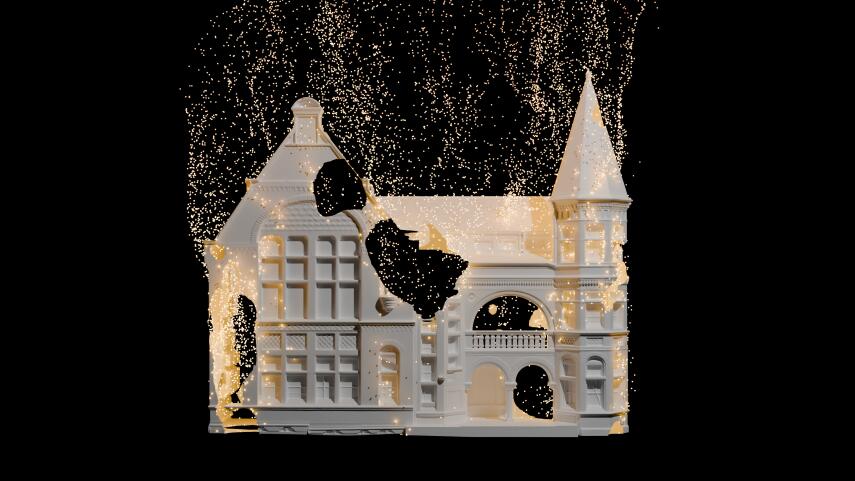
Take a spectral journey to southern places at Tātai Whetū, Tātai Tangata
A new moving image projection and sound work on the former Municipal Chambers building will explore journeys past and present – including that of the building itself.
6 Jul 2026
Christchurch’s Electric Avenue sets new records
Australasia’s biggest music festival has broken its own record for the largest visitor spend of any Christchurch event this decade.
15 May 2026
Thousands set to run at biggest ever Christchurch Marathon
More than 8000 people will take to the streets for this weekend’s Christchurch Marathon, the largest field in the event’s 49-year history.
9 Apr 2026