
Christchurch provides a range of bus and ferry services for those living in or visiting the city.
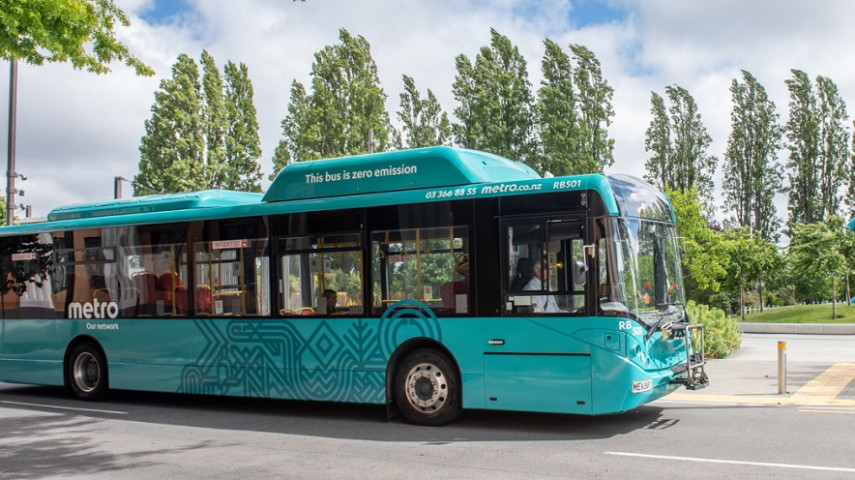
Christchurch bus and ferry services and routes are managed and provided by Environment Canterbury (ECan)(external link), operating under the branding Metro(external link).
Christchurch City Council provides the infrastructure like bus lanes, bus stops, and bus signal priority at intersections.
If you're new to catching the bus or ferry, check out Getting started with Metro(external link) or see the information below.
The Metro network provides bus routes from most suburbs to the city, all shopping centres and a range of attractions around Ōtautahi Christchurch.
Plan your trip
Council provides Christchurch's public transport infrastructure, such as bus lanes, bus stops, and bus signal priority at intersections.
Bus stops
Christchurch has around 1,800 bus stops that provide access to Metro bus services. All of the Council's bus shelters are smoke-free and vape-free.
Most bus stops are used for passenger pick-up and drop-off only. However, some also serve additional operational functions such as timing points (where buses may wait to better align with the timetable) or driver changeover locations (where bus driver shifts change).
To report a cleaning or maintenance issue at a bus stop, please call 03 941 8999 or email info@ccc.govt.nz. You can also use the handy Snap Send Solve app to report graffiti, damage and missing signage at Council bus shelters.
Bus shelters with advertising screens are maintained by oOh! Media. Please phone them on 0800 237 435 for maintenance issues, such as graffiti or broken glass.
Bus stop upgrades
Council regularly receives requests from the public, bus operators, and other stakeholders to upgrade specific bus stops. These requests are assessed by staff based on factors such as passenger patronage, surrounding land use, safety considerations, and operational requirements. Where a request is supported, it may be added to the delivery programme. Bus stop upgrades may include the provision of:
- Seat or shelter
- Standard line marking (lead-in, bus box, and lead-out no-stopping) restrictions
- Bus stop relocation
- Accessible kerb and channel
- Tactile pavers
- Hardstand area
- Green surfacing treatment
As many of these upgrades require approval from Council or Community Boards, they must progress through the Council’s formal process. This typically includes design development, public consultation, reporting to the Community Board or Council for decision-making, and construction. As a result, bus stop upgrades can take some time to progress.
Bus priority measures are put in to reduce congestion, improve public transport travel time and reliability and make it a convenient, attractive travel option.
Many bus lanes only operate during peak travel times but in some locations, they operate 24 hours.
All bus lanes have signage showing their hours of operation. During those hours, only buses, bicycles, motorcycles, motor scooters, mopeds and emergency service vehicles responding to an emergency may use the bus lane. People on bicycles may use bus lanes at any time.
An exception applies where a lane is marked Bus Only. In these lanes, only buses are permitted.
To ensure that the bus lanes operate efficiently, Council actively enforces the lanes. You can get a ticket for $150 for travelling in a bus lane so please make sure you follow the rules.
Related news
Working together to progress New Brighton's resurgence
Christchurch City Council is working with the owners of ‘barrier sites’ in New Brighton to make changes to improve the vibe of the area.
21 May 2026
Community board plans unanimously adopted
Community boards across Christchurch and Banks Peninsula have confirmed their vision and priorities for the coming three years, thanks to their communities’ input.
15 May 2026
What you had to say about the Council’s spending priorities
The community has had its say on Christchurch City Council’s plans for 2026/27, and now it’s time for the decision makers to start considering the feedback.
4 May 2026