
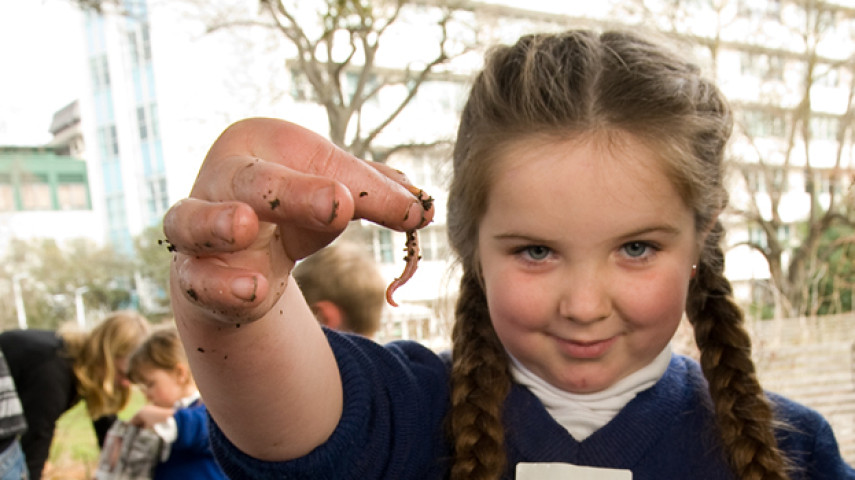
Even worms are doing their thing for the environment. Students search for worms, create their own mini worm farm to take back to school and learn how to care for these amazing creatures.
Book a Learning Through Action school programme
Risk analysis and management information (RAMS) will be sent out once a programme booking is confirmed. If you require this at any other stage please email LTA@ccc.govt.nz or contact us(external link).

A programme aimed at junior students to discover the important role worms can play in our waste management system.
| Year level | 0 to 4 |
|---|---|
| Curriculum level | 1 to 2 |
| Availability | Year-round |
| Times | 9.30am to 11.30am or 12.30pm to 2.30pm |
| Sites | EcoDepot/EcoDrop Metro Place Bromley or Curator's House Botanic Gardens |
| Cost | Free |
| Number of students | Maximum of 30 |
| Requirements | Each student needs to bring a 1.5 or 2 litre plastic bottle ready for reuse. Closed-in shoes must be worn. |
- Sustainability
- Personal and social responsibility for action
- Waste hierarchy
- Natural cycles for dealing with waste
- Worm farming
- Organic waste
Students will discover the magic of worm casts — the result of busy worms transforming our food scraps into great compost for our soils.
During this programme, students will also discuss the importance of reducing, reusing and recycling.
Specifically designed for young children, this guided process will help students build a worm farm, fill it with some wriggly new workers and learn how to care for these amazing creatures back at home or school.
We are learning to:
- Show how to reuse household materials to create a simple and temporary worm farm.
- Understand and describe how worms recycle food waste and other organic materials that can then be used to grow new plants.
- Identify actions we can take to encourage better use of organic resources.
- Explain at least one way that we can reduce waste we produce.
Using language, symbols and texts
Students will use oral, written and visual texts to interpret key vocabulary and concepts; to identify worm habitats, and to understand basic worm care.
Thinking
Students will use creative, critical and meta-cognitive processes to follow instructions; to problem-solve and to expand knowledge of worms, worm farms and worm care.
Managing self
Students will manage their learning and think and act independently.
Participating and contributing
Students will contribute to expanding group knowledge by understanding basic worm care and husbandry so as to help care for worms back in the classroom.
Relating to others
Students will work collaboratively and supportively to complete tasks; take turns and support their classmates.
|
Curriculum area |
Strand and level |
Objective |
|---|---|---|
|
Science Pūtaiao |
Nature of Science Levels 1 and 2 |
Investigating in science Communicating in science Participating and contributing |
|
Living World Levels 1 and 2 |
Life processes Ecology |
|
|
Technology Hangarau |
Technological Practice Levels 1 and 2 |
Planning for practice |
|
Technological Knowledge Levels 1 and 2 |
Technological systems |
|
|
Nature of Technology Levels 1 and 2 |
Characteristics of technology Characteristics of technological outcomes |
|
|
Social Sciences Tikanga ā-Iwi |
Levels 1 and 2 |
Participating in groups Economic roles |
|
Health and Physical Education Hauora |
Levels 1 and 2 |
Collective action Healthy environments |
Related news
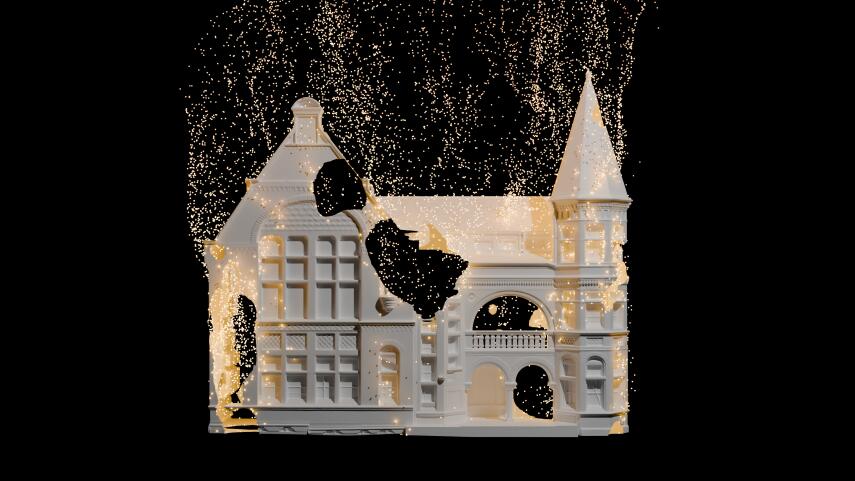
Take a spectral journey to southern places at Tātai Whetū, Tātai Tangata
A new moving image projection and sound work on the former Municipal Chambers building will explore journeys past and present – including that of the building itself.
6 Jul 2026
Christchurch’s Electric Avenue sets new records
Australasia’s biggest music festival has broken its own record for the largest visitor spend of any Christchurch event this decade.
15 May 2026
Thousands set to run at biggest ever Christchurch Marathon
More than 8000 people will take to the streets for this weekend’s Christchurch Marathon, the largest field in the event’s 49-year history.
9 Apr 2026