
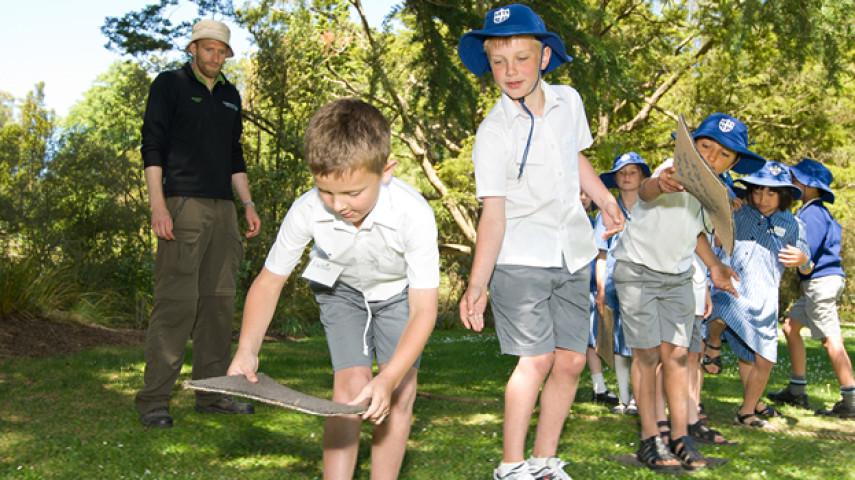
In the Botanic Gardens or Halswell Quarry Park, students investigate how and why New Zealand biodiversity has changed over time.
Book a Learning Through Action school programme
Risk analysis and management information (RAMS) will be sent out once a programme booking is confirmed. If you require this at any other stage please email LTA@ccc.govt.nz or contact us(external link).

| Year level | 5 to 10 |
|---|---|
| Curriculum level | 2 to 6 |
| Availability | Year-round |
| Times | 9.30 am to 12noon or 12.15pm to 2.30pm |
| Site | Christchurch Botanic Gardens or Halswell Quarry Park |
| Cost | Free |
| Number of students | Maximum of 35 |
| Special requirements | None |
- Biodiversity and sustainability.
- Native, endemic and introduced species.
- Endangered and extinct species.
- Ecosystems and habitats.
- Human impact on our biodiversity.
- Personal and social responsibility for action.
At the Botanic Gardens or Halswell Quarry Park, students explore the meaning of biodiversity and look at a timeline showing New Zealand native, endemic and introduced species and make links to those species which are extinct, threatened or thriving.
Children will visit the native forest to explore the different ways in which people value our native plants and animals.
Children engage in an action-packed activity to explore the consequences of habitat destruction and discuss what they can do to prevent the loss of native plants and animals.
We are learning to:
- Explain the terms biodiversity, native, endemic, introduced, threatened and extinct.
- Understand the human impacts on native biodiversity.
- Identify native plants and trees and how these have been used as resources.
- Understand the different ways in which people value native biodiversity and identify actions we can take to sustain biodiversity.
Using language, symbols and texts
Students will use written, oral and visual texts to explore definitions of the origin and life status of creatures living in New Zealand
Thinking
Students will use creative, critical and metacognitive processes to consider the consequences and real-life meanings of the information they have explored regarding the creatures who once lived and continue to live in New Zealand.
Managing self
Students will manage their learning and think and act independently.
Participating and contributing
Students will contribute to expanding group knowledge by participating in a variety of whole-group activities and engaging in discussion to determine potential follow-up activities they can undertake to support our native species.
Relating to others
Students are expected to maintain effective interactions with their peers in a range of contexts offered through a variety of activities
| Curriculum area | Strand and level | Objective |
|---|---|---|
| Science Pūtaiao |
Nature of Science Levels 2 to 6 |
Investigating in science Communicating in science Participating and contributing |
| Living World Levels 2 to 6 |
Life processes Ecology Evolution |
|
| Social Science Tikanga ā-Iwi |
Levels 2 to 6 | Social Studies Geography |
The Christchurch Art Gallery offers a complimentary programme, please contact the Art Gallery on artgallery.schools@ccc.govt.nz for more information.
Related news
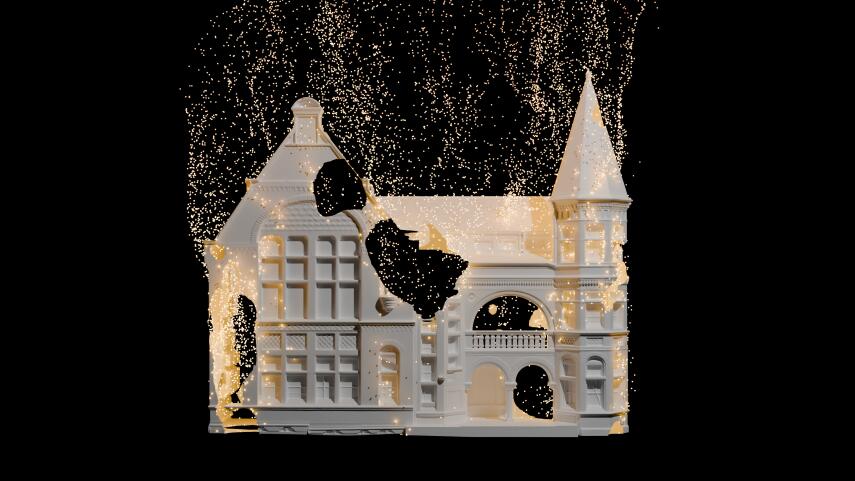
Take a spectral journey to southern places at Tātai Whetū, Tātai Tangata
A new moving image projection and sound work on the former Municipal Chambers building will explore journeys past and present – including that of the building itself.
6 Jul 2026
Christchurch’s Electric Avenue sets new records
Australasia’s biggest music festival has broken its own record for the largest visitor spend of any Christchurch event this decade.
15 May 2026
Thousands set to run at biggest ever Christchurch Marathon
More than 8000 people will take to the streets for this weekend’s Christchurch Marathon, the largest field in the event’s 49-year history.
9 Apr 2026